Let’s start with a fair question, because the answer is messier than it looks: what do we actually mean by “French music”?
American and British pop rule the airwaves in France just like everywhere else, so it can’t mean “all music played in France.”
But does it mean only music made in France?
That would cut out Jacques Brel and Stromae (both Belgian), Céline Dion (proudly Québécoise) and a good chunk of the artists the French themselves adore.
So here’s how we’ll use it: music in French, centered on France but reaching right across the francophone world.
A good chanson is social glue as much as entertainment, the thing everyone belts out at weddings, in stadiums, and at two in the morning when the bars close down, and plenty of those singalongs were written in Brussels or Montréal.
We’ll start in France and circle back to the wider francophonie at the end.
Consider this your way in: the genres that shape the sound, a quick way to find artists you’ll actually love, the joy of learning French through music, and the most famous names worth knowing.
French music genres
French music isn’t one sound, it’s a whole family of them. Here’s a quick tour of the big ones, from centuries-old storytelling to chart-ruling rap.
Chanson française
This is what most people picture first when they think of French music: words above all, the melody there to serve the story. Chanson is the tradition of Édith Piaf, Jacques Brel, Georges Brassens, and Charles Aznavour, where great lyrics and melody outrank a big chorus.
The best songs of the genre are like three-minute-long stories.
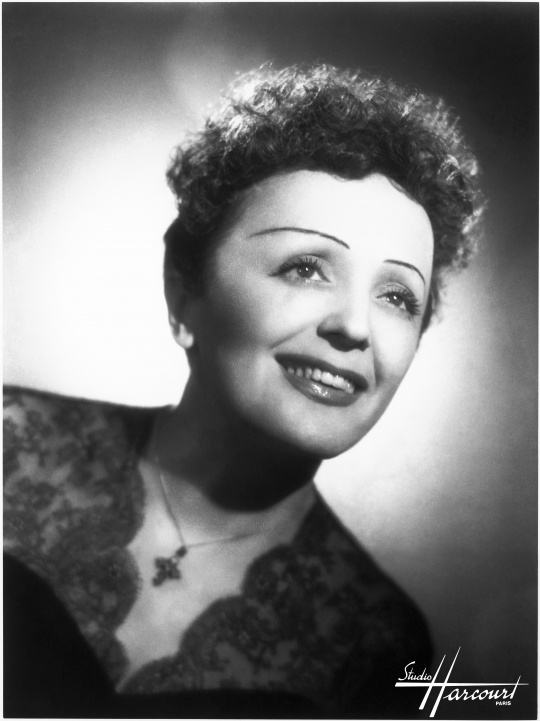
Over the years, the sound and subjects of la Chanson française have evolved. In the 1960s and 1970s, Serge Gainsbourg and Renaud took the genre in more provocative and political directions respectively.
In the early-2000s “la nouvelle scène française” revived it through artists like Benjamin Biolay, Vincent Delerm, and Zaz; and today you can hear its heritage everywhere from Pomme’s hushed folk to Juliette Armanet’s piano-pop and Eddy de Pretto’s raw, half-spoken confessions.
French jazz & jazz manouche
France didn’t invent jazz, but it gave the music a second home and one entirely original offshoot. In 1930s Paris, guitarist Django Reinhardt and violinist Stéphane Grappelli founded the Quintette du Hot Club de France and created jazz manouche (gypsy jazz): swinging, virtuosic and unmistakably European.
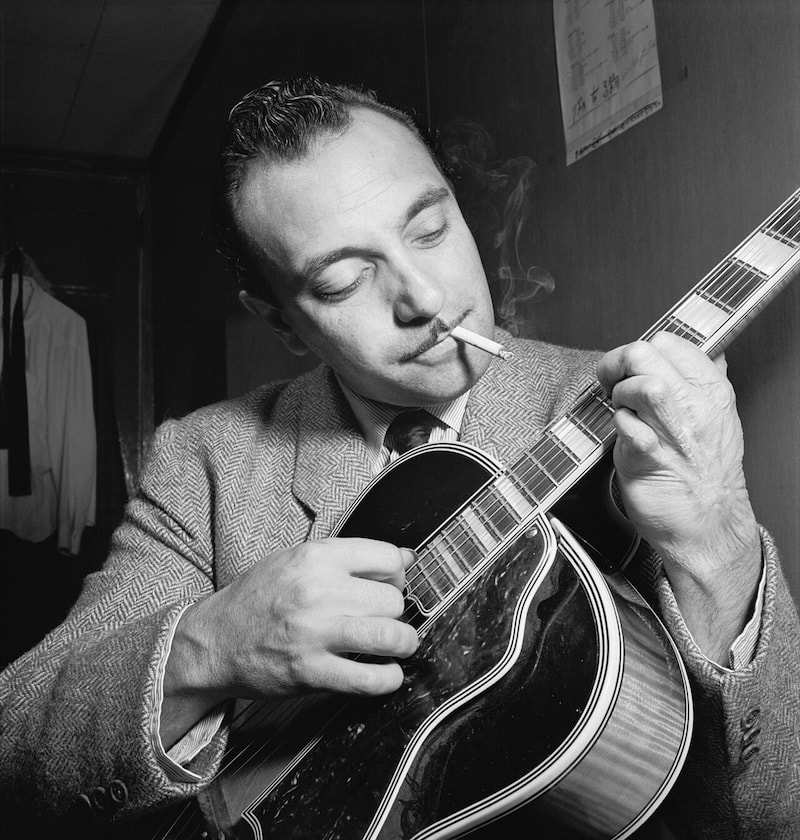
Django is still revered as one of the greatest guitarists who ever lived, the style lives on in players like Biréli Lagrène and Thomas Dutronc (Françoise Hardy and Jacques Dutronc’s son, as it happens), and Paris has been a haven for jazz musicians from all over the world ever since.
Yé-yé
Yé-yé was France’s answer to the rock’n’roll washing in from America and Britain in the early 60s. Named for all those “yeah yeah” choruses borrowed straight from the radio, it could be bright and bubblegum, sung by impossibly cool young women like France Gall, Sylvie Vartan, and Françoise Hardy, but it could have a bit of a bite too.
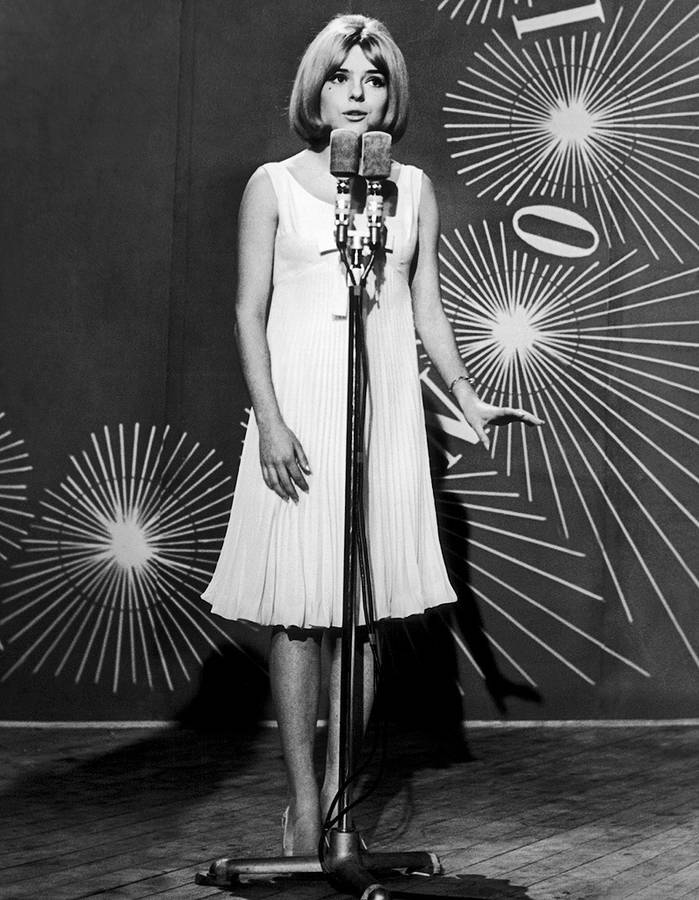
Developing right alongside the early rock of a young Johnny Hallyday, Serge Gainsbourg was also part of the yé-yé crowd, often slipping sly, grown-up lyrics into songs built for teenagers.
The era was brief, but its black-and-white cool has never gone out of fashion: you’ll still catch it sampled, covered, and lovingly imitated in films, ads, and the odd retro pop record today.
French pop
Modern French pop is having a real moment. Artists like Aya Nakamura, Clara Luciani, Christine and the Queens, and Hoshi make pop that’s witty, polished and increasingly exported well beyond the francophone world. If you want a way into French music as it sounds today, start here.
Variété française, its older and broader cousin, is the big tent of mainstream French popular song: polished, radio-friendly and built to be sung by absolutely everyone, sitting somewhere between chanson and straight-up pop.
It’s the lane of Jean-Jacques Goldman, Daniel Balavoine, Michel Sardou, and Mylène Farmer.
French rock
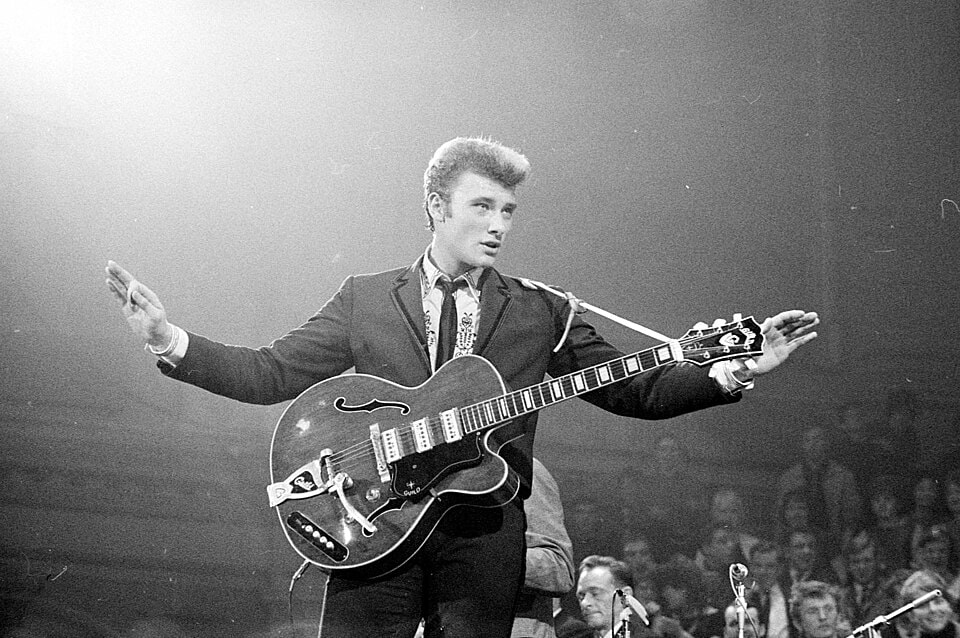
France took rock and made it its own, starting with Johnny Hallyday’s Elvis-sized swagger and detonating in the late 70s with bands like Téléphone, then the stadium-filling Indochine, who somehow still pack arenas today.
The 90s brought a darker, heavier wave with Noir Désir and the beloved Louise Attaque; the 2000s a youthful revival in BB Brunes; and more recently the literary, atmospheric rock of Feu! Chatterton.
Louder, scrappier and more anthemic than the chanson tradition, it’s built for shouting along in a crowd.
Rap français (French rap)
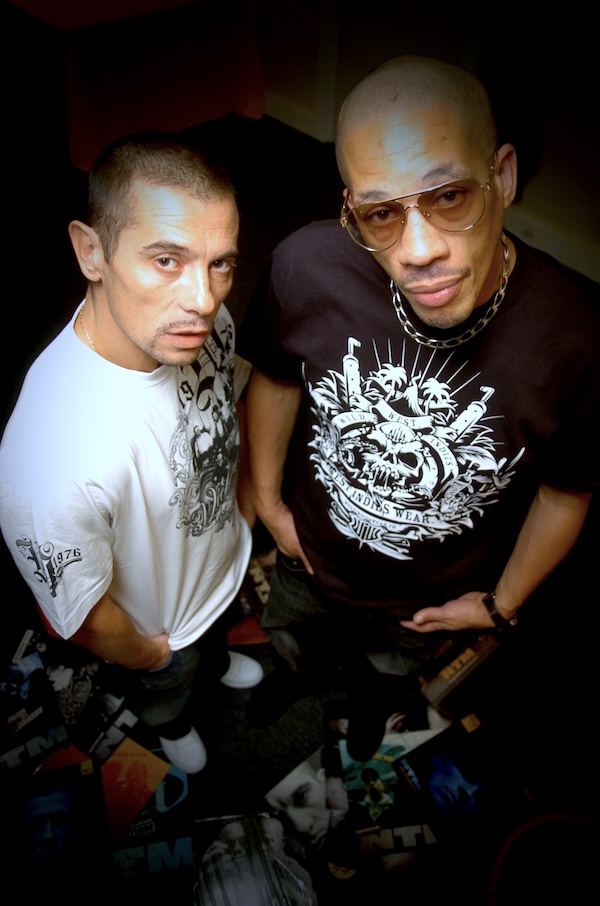
Here’s the one that surprises people: France is the second-biggest rap market in the world, full stop. From the pioneers like IAM, MC Solaar, and Suprême NTM in the 90s to today’s heavyweights, Orelsan, PNL, and Booba, rap français is arguably the dominant sound of French music right now.
If you explore one modern genre, make it this one.
French electro (the French touch)
You already know this one, even if you don’t realize it. The “French touch” gave the world Daft Punk, Justice and Air: sleek, filtered, instantly recognizable dance music that became one of France’s biggest cultural exports.

Daft Punk bowing out in 2021 felt like the end of an era, but the lineage rolls on, through the dark synths of Gesaffelstein and Kavinsky (whose “Nightcall” opens the film Drive), the prodigy pop of Madeon and Petit Biscuit, and the global chart domination of DJ Snake. You can hear the French touch’s fingerprints all over Stromae’s pop, too.
French songs you’ll want to know
Sometimes you don’t fall for an artist so much as a single song: the one playing in the café, the film, the wedding. These are the tracks that live in the French collective memory, a mix of timeless classics everyone knows by heart and modern hits that took over the radio (and, lately, TikTok).
Learning them is a shortcut to a hundred little cultural references, and a great playlist to listen to.
Timeless classics
- “La Vie en rose” – Édith Piaf (1947). The most famous French song in the world, full stop.
- “Non, je ne regrette rien” – Édith Piaf (1960). Defiant and soaring, and somehow everywhere from films to figure-skating.
- “Les Feuilles mortes” – Yves Montand (1940s). You almost certainly know it as “Autumn Leaves.”
- “Les Champs-Élysées” – Joe Dassin (1969). The guaranteed singalong at any French party.
- “Comme d’habitude” – Claude François (1967). Later rewritten into “My Way” for Frank Sinatra.
- “Ne me quitte pas” – Jacques Brel (1959). One of the most devastating breakup songs ever written, and one of the most covered.
- “Mistral gagnant” – Renaud (1985). Regularly voted the French public’s single favorite song.
Modern singalongs
- “Papaoutai” – Stromae (2013). Impossibly danceable, quietly heartbreaking.
- “Désolé” – Sexion d’Assaut (2010). So inescapable that people took to singing “je suis désolé” instead of just saying it.
- “Dernière danse” – Indila (2013). A dramatic global earworm with a whole second life on TikTok.
- “Djadja” – Aya Nakamura (2018). The breakout that turned her into a worldwide star.
- “Je veux” – Zaz (2010). Jazzy, joyful and absolutely everywhere that year.
- “Bella” – Maître Gims (2013). One of the biggest French hits of the decade.
- “Basique” – Orelsan (2017). Proof of how far French rap had moved into the mainstream.
Music in French beyond France
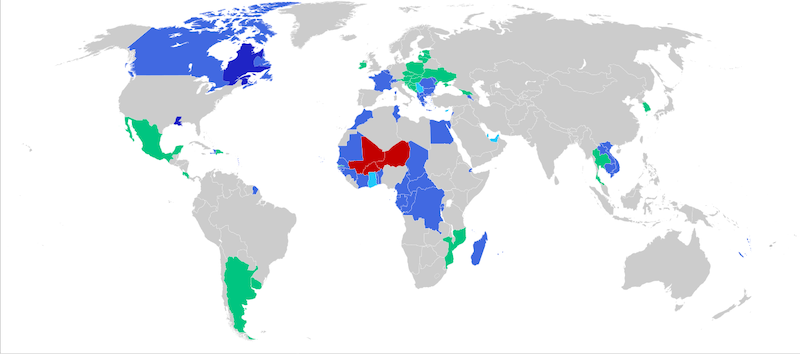
Which brings us back to that opening question. So much of the music worth knowing is sung in French but made well outside l’Hexagone, and for a learner, every bit of it counts. A few scenes worth your ears:
Québec and Canada
French Canada has its own deep, fiercely proud tradition, la chanson québécoise. It runs from founding figures like Félix Leclerc, Gilles Vigneault and Robert Charlebois to the global superstar Céline Dion, and on to modern favorites like Cœur de Pirate and the much-loved folk-rock band Les Cowboys Fringants. The Québécois accent and turns of phrase are an adventure all their own, too.
Belgium
Belgium punches absurdly above its weight. It gave French song one of its all-time giants in Jacques Brel, and it’s behind two of the biggest francophone pop stars working today, Stromae and Angèle. Not bad for a small country.
Africa
Francophone Africa is one of the most vibrant music scenes anywhere, and its influence on French pop and rap is enormous. Many of France’s biggest current stars, Aya Nakamura among them, carry African roots and rhythms straight into the mainstream, and artists across West and Central Africa record in French alongside their local languages.
The Caribbean
From the French Antilles came zouk, the irresistible dance sound pioneered by Kassav’, whose “Zouk-La-Sé Sèl Médikaman Nou Ni” became a worldwide hit. It’s living proof that “French music” stretches a lot further, and a lot more tropical, than Paris.

Learning French through music
Here’s the not-so-well-kept secret of language learning: music does a lot of the heavy lifting for you. Songs drill pronunciation, rhythm, and vocabulary into your brain pretty painlessly, and they teach you the casual, idiomatic French that textbooks tend to skip.
A chorus you can’t stop humming? Félicitations, you’ve learned a phrase in French!
Here are a few tips on the best way to learn French through music:
1. Start with songs you’d enjoy anyway
Motivation beats method every time, so pick artists you actually like.
2. Read the lyrics as you listen
Most streaming apps now show synced, karaoke-style lyrics that scroll in time with the music: Deezer and Spotify both do this, and Deezer even offers translations for many foreign-language songs. When you want the deeper meaning, Genius has full lyrics with annotations and community translations that unpack the slang and references a textbook never will.
3. Stick to just a few songs at first
Rather than putting your playlists on shuffle, stick to a couple songs to listen to en boucle. 🔁 Repetition is how to get the vocabulary and pronunciation to really stick.
4. Mix eras & genres
A Piaf classic, a Stromae hit and a verse of rap français will each stretch different muscles.
5. Go behind the music
A good French class pairs beautifully with all this listening to give you the grammar and structure so you can actually understand what you’re singing.